How to Choose the Right Mobile App Development Company in India
1. Review Their Portfolio for Relevant, Real-World Experience
Key highlight: Look to see if their past work has involved the kind of problems you’re trying to solve, not just whether or not the portfolio looks good. A beautifully built app that never scaled beyond a few hundred users says little about how the company tackles real growth challenges.
2. Evaluate Technical Expertise Across the Full Stack
Mobile app development today involves far more than just writing code for iOS or Android. A capable company needs strength across native and cross-platform development (Swift, Kotlin, Flutter, React Native), backend architecture, API integrations, cloud infrastructure, and increasingly, AI-powered features. Ask specifically about their experience with the technologies your app will actually need, not just their general capabilities.
Companies that push you toward a specific technology regardless of your project's actual requirements are often optimizing for their own convenience, not your app's success.
Key highlight: The right technology choice should come from your project's requirements, not from whatever the development team happens to know best. A team with broad technical depth can genuinely recommend what's right for you, rather than force-fitting your idea into their comfort zone.
3. Check Client Reviews and Ask for Direct References
Client testimonials on a company's own website are curated by definition — they'll only show the good ones. Independent review platforms like Clutch, GoodFirms, or Google Reviews give a more honest picture of how a company actually performs, including how they handle challenges and communicate when things don't go perfectly.
Beyond reading reviews, don't hesitate to directly ask for references from past clients, especially ones with projects similar to yours. A confident, established company will have no issue connecting you with a previous client willing to speak honestly about their experience.
Key highlight: A company's own marketing will always sound impressive — real client feedback is where the truth actually lives. Independent reviews and direct references reveal how a company performs when a project gets genuinely difficult.
4. Assess Communication Style and Responsiveness Early
How a company communicates during the sales process is often a strong predictor of how they'll communicate once you're a paying client mid-project. Pay attention to how quickly they respond to inquiries, how clearly they explain technical concepts, and whether they ask thoughtful questions about your business rather than jumping straight into a generic pitch.
For international clients, time zone overlap and language clarity also matter significantly — a technically excellent team that's difficult to communicate with can still create major project friction.
Key highlight: The way a company communicates before you sign a contract is usually the best preview of how they'll communicate after. Strong technical skills mean little if project updates are vague, delayed, or hard to understand.
5. Understand Their Development Process and Methodology
A structured, transparent development process is a strong signal of a mature company. Ask specifically how they handle requirements gathering, sprint planning, testing, and client check-ins throughout the project. Companies using agile methodologies with regular sprint reviews typically offer more visibility and flexibility than those using rigid, opaque processes with infrequent updates.
Equally important is understanding how they handle mid-project changes — since requirements almost always evolve somewhat during development, and a company's flexibility around that reality matters significantly.
Key highlight: A clear, structured process isn't bureaucracy — it's what keeps a complex project from quietly drifting off track. Companies that can't clearly explain their own development process often struggle to manage yours effectively.
6. Compare Pricing Models, Not Just Price Points
India offers genuinely competitive development rates compared to many other markets, but the lowest quote isn't automatically the best value. Understand exactly what's included in a quoted price — does it cover post-launch support, bug fixes, revisions, and documentation, or are those extra costs that will surface later?
Fixed-price models offer budget predictability but can lead to scope rigidity, while time-and-materials models offer flexibility but require more active budget monitoring. Understanding which model fits your project — and exactly what's included — prevents unpleasant cost surprises later.
Key highlight: The cheapest quote often becomes the most expensive project once hidden costs and scope gaps surface later. True value comes from transparent pricing that covers the full project lifecycle, not just the initial build.
7. Verify Their Approach to Data Security and Compliance
Mobile apps frequently handle sensitive user data, payment information, or industry-specific compliance requirements like HIPAA or GDPR. A capable development company should be able to clearly explain their approach to data security, secure coding practices, and any relevant compliance standards for your industry.
Companies that treat security as an afterthought rather than a built-in part of their development process create real long-term risk — both for user trust and for potential legal or regulatory exposure.
Key highlight: Security can't be bolted onto an app after launch — it has to be part of the foundation from day one. A development partner who takes security seriously protects both your users and your business's long-term liability.
8. Ask About Post-Launch Support and Maintenance
Launching an app is just the beginning of its lifecycle, not the end of the project. Operating systems update, devices change, and user feedback surfaces bugs and improvement opportunities that weren't visible during initial development. A reliable development company should offer clear post-launch support options, including bug fixes, performance monitoring, and ongoing updates.
Companies that treat launch as the finish line, with no clear plan for what happens afterward, often leave clients scrambling to find new support when issues inevitably arise.
Key highlight: An app's real lifecycle begins at launch, not ends there. Choosing a company with genuine post-launch support prevents you from being stranded the moment real users start interacting with your app.
9. Look for Cultural and Business Understanding, Not Just Technical Skill
The best development partners don't just execute what you ask for — they understand your business goals well enough to offer meaningful input on features, priorities, and trade-offs. Companies that ask thoughtful questions about your target users, business model, and long-term goals during initial conversations are signaling a partnership mindset rather than a pure "build what's written in the spec" approach.
This kind of business understanding often makes the difference between an app that technically works and an app that actually achieves what the business set out to accomplish.
Key highlight: The best development partners think like stakeholders in your app's success, not just contractors executing a spec. That difference in mindset often shows up directly in the quality of the final product.
10. Trust the Chemistry, Not Just the Credentials
Credentials, portfolios, and technical skills matter enormously — but they're not the whole picture. You'll be working closely with this team for months, communicating regularly, and relying on their judgment for decisions that affect your business. If something feels off during initial conversations — vague answers, pressure tactics, or a lack of genuine curiosity about your project — that instinct is worth taking seriously, even if everything else looks good on paper.
The right development partner should feel like a genuine collaborator invested in your app's success, not just a vendor executing a transaction.
Key highlight: Technical skill gets an app built — but trust and genuine collaboration are what get it built right. Don't override a clear gut instinct just because the credentials look impressive on paper.
Final Thoughts: Choose a Partner, Not Just a Vendor
Choosing a mobile app development company in India isn't just about finding technical capability — that's genuinely abundant across the market. The real differentiator is finding a team that combines strong technical skill with clear communication, transparent processes, and a genuine investment in your business's success, not just the completion of a contract.
Taking the time to properly evaluate portfolio depth, communication style, pricing transparency, and post-launch support upfront saves significant time, money, and frustration compared to discovering these gaps mid-project.
Quick action checklist for businesses:
- Review portfolios for relevance to your industry and project complexity, not just visual polish
- Check independent reviews and speak directly with past clients
- Clarify exactly what's included in pricing, including post-launch support
- Confirm their approach to data security and compliance upfront
- Trust your instincts about communication and genuine business understanding, not just credentials
Frequently Asked Questions
Related Articles
 App Development
 How Mobile Apps Improve Customer Engagement and Business Operations
Mobile apps drive higher engagement, retention, and operational efficiency. Learn why businesses in 2026 are investing in apps for growth and customer loyalty.
 App Development
 Mobile App Development for Startups: A Complete Guide
A practical, step‑by‑step guide to mobile app development for startups: validate the need, choose the right tech (native, cross‑platform, or PWA), define an MVP, design for retention, and launch with a clear ASO and growth plan. Plus, how JHB Automations helps startups ship production‑ready apps faster—strategy, design, dev, QA, launch, and post‑launch growth under one roof.
 App Development
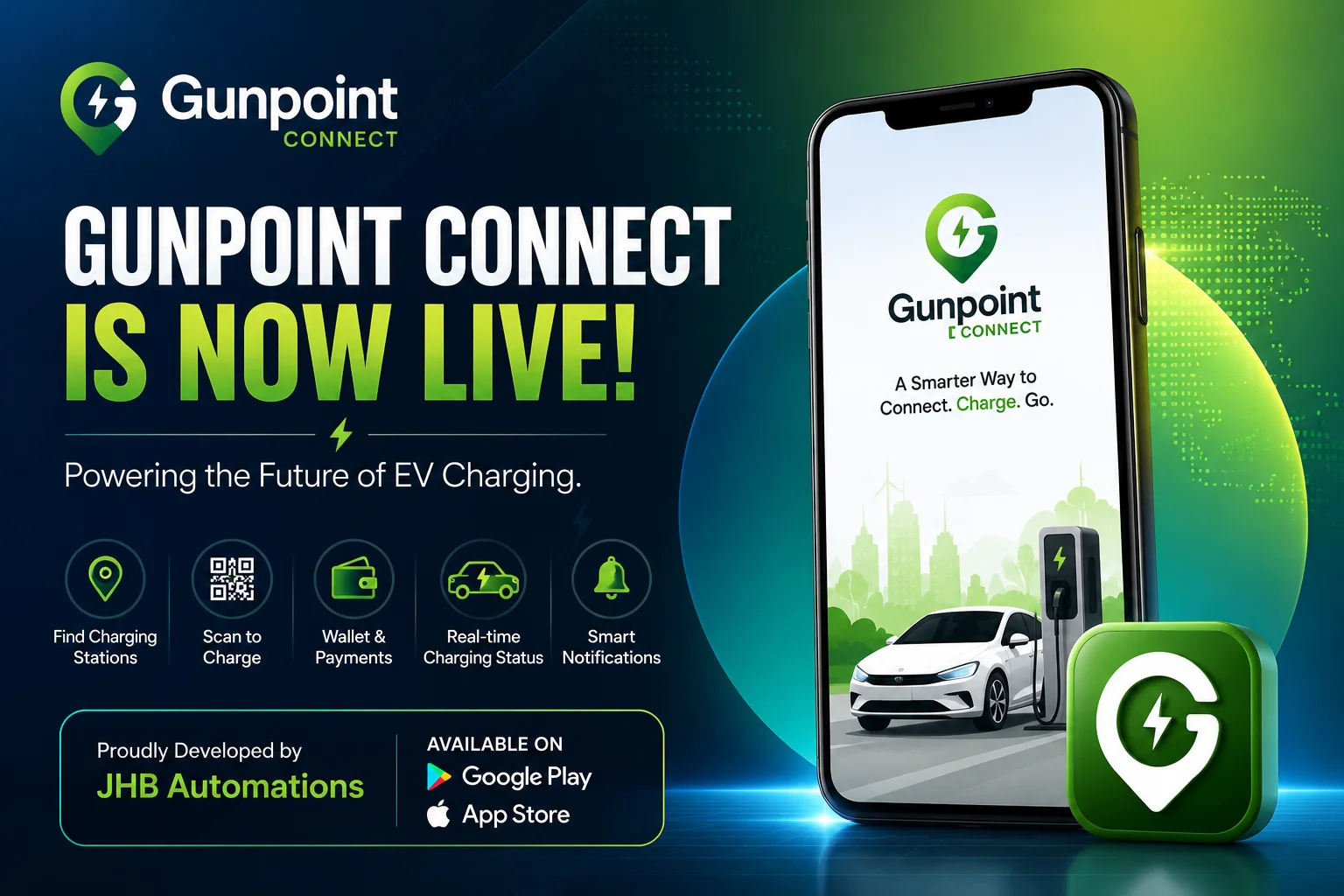
 Introducing Gunpoint Connect: Our EV Charging App Is Now Live on Google Play and the App Store
JHB Automations proudly announces the launch of Gunpoint Connect, a complete EV charging companion app now live on both the Google Play Store and Apple App Store. Discover how this app helps EV owners find charging stations, start sessions instantly, manage payments, and plan long trips — all in one place.