Best Social Media Platforms for Business Marketing: A Complete Guide
Social media has become an essential part of modern business marketing. Whether you run a small local business, an e-commerce store, a startup, or an established company, choosing the right social media platform can help you reach potential customers, build brand awareness, generate leads, and increase sales.
However, every platform works differently. The best platform for one business may not be the right choice for another. Your target audience, business goals, content type, and marketing budget should all influence your decision.
In this guide, we’ll explore the best social media platforms for business, what each platform is best suited for, and how you can choose the right platforms for your marketing strategy.
Why Social Media Platforms Matter for Businesses
Social media gives businesses an opportunity to connect directly with their target audience. Instead of depending only on traditional advertising, businesses can create content, communicate with customers, answer questions, showcase products, and build long-term relationships.
A well-planned social media strategy can help businesses:
- Increase brand awareness
- Reach new customers
- Generate leads
- Drive website traffic
- Promote products and services
- Improve customer engagement
- Build brand credibility
- Increase conversions and sales
- Understand customer interests and behaviour
The key is not to be present on every platform. Instead, businesses should focus on the platforms where their potential customers are most active.
Best Social Media Platforms for Business
There are several popular social media platforms for business, but the right choice depends on your audience and objectives.
Here are some of the most useful platforms businesses can consider.
1. Instagram
Instagram is one of the most effective platforms for businesses that depend heavily on visual content. It is particularly useful for brands in fashion, food, fitness, beauty, travel, lifestyle, education, real estate, and e-commerce.
Businesses can use Instagram through:
- Reels
- Stories
- Images
- Carousels
- Live videos
- Product content
- Influencer collaborations
Instagram Reels can be particularly useful for reaching new audiences because short-form video content has strong engagement potential.
For businesses targeting younger audiences and consumers who discover products through visual content, Instagram can be an important part of their social media marketing strategy.
2. Facebook
Facebook continues to be a valuable platform for businesses looking to reach a broad audience.
Businesses can create Facebook Pages, publish content, interact with customers, build communities, and run paid advertising campaigns.
Facebook can be useful for:
- Local businesses
- Service providers
- E-commerce brands
- Community-based businesses
- Lead generation
- Customer communication
One major advantage of Facebook is its advertising ecosystem. Businesses can create targeted campaigns based on factors such as demographics, interests, location, and online behaviour.
For local businesses, Facebook can also work alongside Google Business Profile and other digital marketing channels to strengthen online visibility.
3. LinkedIn
LinkedIn is particularly valuable for B2B companies, professionals, consultants, technology companies, recruiters, and service-based businesses.
Unlike platforms that primarily focus on entertainment and lifestyle content, LinkedIn has a strong professional focus.
Businesses can use LinkedIn to:
- Build professional credibility
- Generate B2B leads
- Share industry insights
- Promote services
- Recruit employees
- Connect with decision-makers
- Build professional relationships
If your business sells software, consulting services, HR solutions, automation services, or other B2B products, LinkedIn can become an important part of your social media strategy.
4. YouTube
YouTube is one of the most powerful platforms for businesses that can create educational or video-based content.
Businesses can publish:
- Tutorials
- Product demonstrations
- How-to videos
- Customer testimonials
- Educational videos
- Interviews
- Webinars
- Short-form videos
One important advantage of YouTube is that videos can continue generating views long after they are published.
For example, a company selling CRM software could create videos such as "How to Choose CRM Software for Your Business" or "CRM Software Features Every Small Business Needs."
This type of content can attract people who are already searching for solutions related to the business.
5. TikTok
TikTok has become an important platform for short-form video marketing and content discovery.
Businesses can use TikTok to create entertaining, educational, behind-the-scenes, and product-focused videos.
It can work particularly well for brands that can communicate their personality through creative short-form videos.
However, businesses should not choose TikTok simply because it is popular. The platform should make sense for the target audience and content strategy.
How to Choose the Right Social Media Platform for Your Business
Choosing among different social media platforms can be confusing. Instead of trying to maintain accounts everywhere, consider the following factors.
1. Understand Your Target Audience
The first question should be:
Where does your target audience spend their time online?
For example, a B2B software company may find LinkedIn more valuable than platforms focused primarily on lifestyle content.
Similarly, a fashion or beauty brand may benefit significantly from Instagram because its products can be presented visually.
Understanding your audience should therefore be the foundation of your social media strategy.
2. Define Your Business Goals
Your business goals should influence the platform you choose.
If your goal is:
Brand awareness:
Instagram, Facebook, YouTube, and TikTok can be useful.
B2B lead generation:
LinkedIn can be particularly valuable.
Product promotion:
Instagram, Facebook, YouTube, and other commerce-focused channels can support product discovery.
Educational marketing:
YouTube and LinkedIn can work well.
Community building:
Facebook and Instagram can help businesses develop an engaged audience.
There is no single platform that is best for every business.
3. Consider Your Content Type
Your available content resources also matter.
If your business can consistently create short videos, Instagram Reels, YouTube Shorts, and TikTok may be worth considering.
If your strength is long-form educational content, YouTube and LinkedIn may be more suitable.
If you primarily create images and graphics, Instagram and Facebook can be effective choices.
The best platform is often the one where your business can consistently create valuable content.
Should Your Business Be on Every Social Media Platform?
Not necessarily.
Trying to manage every platform at the same time can result in inconsistent posting and lower-quality content.
Instead, start with two or three social media platforms that are most relevant to your target audience.
For example:
Local service business:
Facebook + Instagram
B2B software company:
LinkedIn + YouTube
E-commerce brand:
Instagram + Facebook + YouTube
Personal brand or consultant:
LinkedIn + Instagram + YouTube
Once you understand which platforms generate the most engagement, traffic, leads, and conversions, you can expand your strategy.
Organic Social Media vs Paid Advertising
Businesses generally use two major approaches: organic content and paid social media advertising.
Organic Social Media
Organic marketing involves publishing content without directly paying for individual impressions or clicks.
Examples include:
- Posts
- Reels
- Stories
- Educational content
- Customer testimonials
- Videos
- Polls
- Community engagement
Organic content is useful for building relationships and long-term brand awareness.
Paid Social Media Advertising
Paid advertising allows businesses to reach specific audiences through targeted campaigns.
Businesses can use paid advertising to promote:
- Products
- Services
- Offers
- Events
- Lead generation campaigns
- Website pages
A combination of organic content and paid advertising can create a more complete social media marketing strategy.
How to Create an Effective Social Media Strategy
Simply creating accounts on different platforms is not enough. Businesses need a clear strategy.
Start by defining your target audience and business objectives. Then select the platforms that best match those goals.
Next, create different content categories.
For example, a digital marketing company might use:
- Educational posts
- SEO tips
- Industry updates
- Client success stories
- Marketing statistics
- Short videos
- Service-related content
Create a content calendar to maintain consistency. Track your performance regularly and identify which types of content generate the strongest results.
Important metrics include:
- Reach
- Impressions
- Engagement
- Website clicks
- Leads
- Follower growth
- Conversion rate
These metrics can help you understand whether your social media efforts are contributing to your business goals.
Common Social Media Marketing Mistakes to Avoid
Businesses often make the mistake of focusing only on follower numbers.
Having thousands of followers does not automatically mean you are generating business.
Some common mistakes include:
Posting Without a Strategy
Randomly publishing content without clear objectives can make your social media presence inconsistent.
Focusing Only on Promotion
People don't want to see advertisements in every post. Educational, entertaining, and helpful content should also be part of your strategy.
Ignoring Engagement
Social media is about communication. Responding to comments and messages can help build stronger relationships with your audience.
Choosing Too Many Platforms
Managing too many accounts can reduce content quality and consistency.
Not Measuring Results
Without tracking performance, it becomes difficult to know what is actually working.
Conclusion
Choosing the best social media platforms for business is not about being active everywhere. It is about understanding your audience, defining your goals, selecting the right channels, and consistently creating valuable content.
Instagram can be powerful for visual marketing, Facebook can support broad audience reach and community building, LinkedIn can help with B2B marketing, and YouTube can support long-term video content and education.
The most effective social media strategy is one that aligns your chosen platforms with your audience and business objectives. By focusing on the right channels and measuring your results regularly, you can turn social media from simply a communication platform into a valuable source of brand awareness, engagement, leads, and business growth.
Frequently Asked Questions
Related Articles
 social media marketing
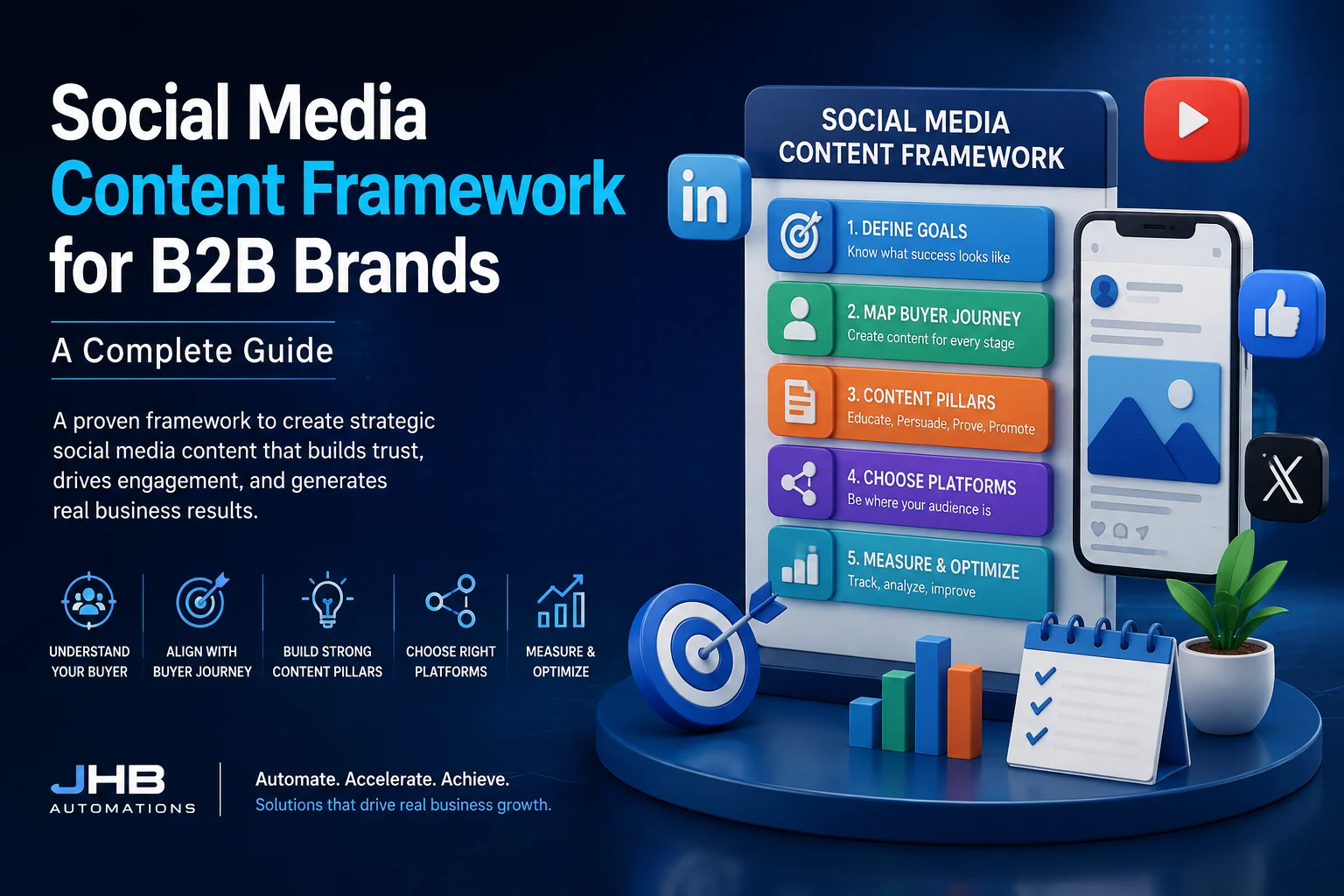
 Social Media Content Framework for B2B Brands
Discover a practical social media content framework for B2B brands to build trust, engage decision-makers, strengthen brand authority, and turn social media activity into measurable business results.
 E-commerce website
The Future of Mobile Commerce and E-commerce Website Development
Mobile commerce growth, AI-driven personalization, headless architecture, voice commerce, PWA, social commerce, AR/VR, and sustainability are the key trends shaping e-commerce websites in 2026.