
12 best practices for Search Campaign Optimization
Search campaign optimization is the difference between burning budget and generating consistent, profitable leads. In 2026, with rising CPCs and smarter algorithms, systematic optimization isn't optional—it's essential for survival.
For JHB Automations, where every rupee of ad spend must translate into qualified pipeline, mastering search campaign optimization means turning Google Ads from a cost center into a predictable revenue engine.
What Is Search Campaign Optimization?
Search campaign optimization is the ongoing process of improving your paid search campaigns (Google Ads, Microsoft Advertising) to maximize conversions, lower cost-per-acquisition (CPA), and increase return on ad spend (ROAS).
It involves:
Refining keyword targeting and negative keyword lists
Improving ad relevance and Quality
Optimizing bids and budgets based on performance data
Enhancing landing page experience and conversion tracking
Optimization isn't a one-time setup—it's a continuous cycle of testing, measuring, and refining based on real performance data.
Why Search Campaign Optimization Matters in 2026
The paid search landscape has changed dramatically:
CPCs are rising: Average cost-per-click increased 15–25% year-over-year across most industries.
Privacy restrictions limit tracking: iOS updates and cookie deprecation reduce visibility into user behavior.
AI-driven bidding dominates: Smart Bidding now controls 70%+ of ad auctions, requiring better data signals.
Competition is intensifying: More businesses are investing in search ads, driving up auction pressure.
Without systematic optimization, campaigns quickly become inefficient—wasting budget on irrelevant clicks, poor-quality traffic, and outdated strategies.
In a high-competition B2B automation market, optimization is your competitive edge—it ensures your ads reach the right decision-makers at the lowest possible cost.
12 Search Campaign Optimization Best Practices
1. Set Clear Campaign Goals and KPIs
Before optimizing, define what success looks like:
Lead generation: Target cost-per-lead (CPL) or cost-per-acquisition (CPA)
Revenue growth: Focus on return on ad spend (ROAS) or revenue-per-click
Brand awareness: Track impressions, click-through rate (CTR), and brand search lift
Set specific, measurable targets (e.g., "Reduce CPA from ₹800 to ₹650 in 60 days") and align bidding strategies accordingly.
Clear goals turn optimization from guesswork into a data-driven science—every change moves you closer to a measurable target.
2. Implement Comprehensive Conversion Tracking
You can't optimize what you can't measure. Proper conversion tracking is the foundation of all optimization efforts.
Essential tracking setups:
Website conversions: Form submissions, demo requests, contact page visits
Phone call tracking: Track calls from ads and website
Offline conversions: Import CRM data to track closed-won deals
Enhanced conversions: Use first-party data to improve attribution accuracy
Use Google Ads' data-driven attribution (instead of last-click) to understand the full customer journey.
Without accurate conversion tracking, you're optimizing blind—every bid adjustment and keyword decision becomes a guess.clicksgeek+1
3. Master Negative Keyword Management
Negative keywords prevent your ads from showing on irrelevant searches, saving budget and improving Quality Score.
Weekly routine:
Go to Google Ads → Campaigns → Insights & Reports → Search Terms
Filter for terms with high spend but zero conversions
Identify low-intent words like "free," "jobs," "DIY," "definition," "tutorial"
Add them as negative keywords at campaign or account level
Create shared negative keyword lists for common exclusions (e.g., "job seekers," "students," "free tools") and apply them across multiple campaigns.
Negative keywords are your first line of defense against wasted spend—they filter out 20–30% of irrelevant traffic before it ever costs you a rupee.
4. Optimize Keyword Strategy and Match Types
Keyword optimization balances reach with relevance. Use a mix of match types to control when your ads appear.
Best practices:
Exact Match ([keyword]): High-intent, high-converting queries—use for core offerings
Phrase Match ("keyword"): Moderate reach with good relevance—ideal for expansion
Broad Match (keyword): Maximum reach but requires tight negative keyword control
Start with Exact and Phrase Match for control, then gradually test Broad Match with Smart Bidding once you have conversion data.
Review search terms weekly—add high-performing queries as new Exact Match keywords and exclude irrelevant variations.
The right keyword mix ensures your ads appear for searches that matter—maximizing qualified traffic while minimizing wasted impressions.
5. Leverage Smart Bidding Strategies
Smart Bidding uses machine learning to optimize bids in real-time based on conversion likelihood. In 2026, it's the default for most successful campaigns.
Recommended strategies:
Maximize Conversions: Best for lead generation with flexible budgets
Target CPA: Set a specific cost-per-acquisition goal
Target ROAS: Ideal for revenue-focused campaigns
Maximize Conversion Value: For e-commerce or high-value deals
Smart Bidding needs data—wait until you have 30+ conversions in the last 30 days before switching from manual CPC.
Smart Bidding turns Google's AI into your 24/7 optimization engine—adjusting bids in milliseconds based on signals you can't manually track.
6. Improve Quality Score to Lower CPC
Quality Score (QS) is Google's rating of your ad relevance, keyword quality, and landing page experience. Higher QS = lower CPC and better ad positions.
Three components of Quality Score:
Expected Click-Through Rate (CTR): How likely users are to click your ad
Ad Relevance: How well your ad matches the search queryclick4corp+1
Landing Page Experience: How relevant and useful your landing page is
How to improve QS:
Write highly relevant ad copy for each keyword group
Include keywords in headlines and descriptions
Ensure landing pages match ad messaging and load quickly
Use ad extensions (assets) to increase CTR
A Quality Score improvement from 5 to 8 can reduce your CPC by 30–40%—making QS optimization one of the highest-ROI activities you can do
7. Write High-Converting Ad Copy
Your ad copy is the bridge between search intent and conversion. In 2026, Responsive Search Ads (RSAs) are the standard format.
RSA best practices:
Provide 10–15 headlines and 4 descriptions for Google to mix and match
Include keywords in headlines for relevance
Highlight unique value propositions (e.g., "Free Demo," "24/7 Support," "Custom Solutions")
Test emotional vs. rational appeals (e.g., "Save 40% Time" vs. "Trusted by 500+ Companies")
Add urgency or scarcity where appropriate (e.g., "Limited Slots," "Book Before Month-End")
Create 3–5 RSAs per ad group with different angles (benefit-focused, feature-focused, social proof-focused) and let Google optimize.
Great ad copy doesn't just attract clicks—it attracts the right clicks from people ready to take action.
8. Maximize Ad Assets (Extensions)
Ad assets (formerly extensions) increase ad visibility and CTR by adding extra information below your ad.
Essential assets to use:
Sitelinks: Direct users to specific pages (e.g., "Pricing," "Case Studies," "Contact")
Callouts: Highlight key benefits (e.g., "Free Consultation," "No Setup Fees")
Structured Snippets: Showcase categories (e.g., "Services: Automation, Integration, Consulting")
Call Extension: Add phone number for mobile users
Lead Form Extension: Let users submit forms without leaving Google
Ads with 4+ assets see 10–15% higher CTR and better Quality Scores.
Ad assets are free real estate—use every available slot to make your ad bigger, more informative, and more clickable.
9. Optimize Landing Pages for Conversions
Your landing page is where clicks become leads. Even the best ads fail if the landing page doesn't deliver.
Landing page optimization checklist:
Message match: Headline and content should mirror ad copy
Clear CTA: One primary action (e.g., "Book Demo," "Get Quote") above the fold
Fast load speed: Pages should load in under 3 seconds (use Google PageSpeed Insights)
Mobile optimization: 60%+ of search traffic is mobile—ensure seamless experience
Trust signals: Add testimonials, logos, certifications, or case studies
Minimal distractions: Remove navigation menus and external links that could lead users away
A/B test landing page elements (headlines, CTAs, form length) to continuously improve conversion rates.
Your landing page is your conversion engine—optimize it relentlessly, because a 1% improvement in conversion rate can double your ROI.
10. Use Audience Targeting and Remarketing
Audience targeting layers additional signals onto your search campaigns, helping you reach high-value users.
Key audience strategies:
Remarketing Lists for Search Ads (RLSA): Target users who visited your site before with adjusted bids
In-Market Audiences: Reach users actively researching your solutions
Custom Intent Audiences: Target users searching for competitor keywords or related topics
Customer Match: Upload CRM lists to target existing customers or create lookalike audiences
Use audience observation mode first to gather data, then apply bid adjustments (e.g., +20% for high-intent audiences).
Audience targeting transforms search campaigns from keyword-only to intent-plus-context—reaching the right people at the right moment.
11. Implement Ad Scheduling and Device Optimization
Not all hours and devices perform equally. Ad scheduling (dayparting) and device bid adjustments help you allocate budget efficiently.
Ad scheduling tactics:
Analyze performance by hour/day in Google Ads → Insights & Reports → Time
Increase bids during high-conversion hours (e.g., 9 AM–6 PM on weekdays)
Reduce or pause bids during low-performing times (e.g., weekends, late nights)
Device optimization:
Check performance by device (mobile, desktop, tablet)
Adjust bids based on CPA/ROAS by device (e.g., +15% for desktop if it converts better)
Ensure mobile landing pages are fully optimized (fast, thumb-friendly, minimal form fields)
Ad scheduling ensures your budget works when it matters most—showing ads to high-intent users during peak conversion windows.
12. Regular Performance Audits and Continuous Testing
Optimization is not a one-time task—it's an ongoing discipline. Top performers audit campaigns weekly and test continuously.
Weekly optimization routine:
Review Search Terms Report for new negative keywords and opportunities
Check Quality Score trends and identify declining keywords
Analyze ad performance and pause low-CTR ads
Monitor conversion rates and landing page performance
Monthly optimization routine:
Audit campaign structure (are ad groups tightly themed?)
Review budget allocation (shift spend to high-ROAS campaigns)
Test new ad formats (e.g., Performance Max, video ads)
Evaluate attribution models and adjust bidding strategies
Testing framework:
Reserve 10–15% of budget for testing new approaches
Test one variable at a time (e.g., headlines, CTAs, landing pages)
Run tests for 2–4 weeks to gather statistically significant data
Continuous testing and auditing keep campaigns fresh and efficient—what worked 6 months ago may be costing you money today.
Common Search Campaign Optimization Mistakes to Avoid
Even experienced marketers make these costly errors:
Ignoring Search Terms Report
Not reviewing actual search queries means wasting budget on irrelevant clicks.
Review search terms weekly and add negative keywords immediately.
Overlooking Conversion Tracking
Running campaigns without proper tracking is like driving blindfolded.
Set up conversion tracking before launching any campaign.
Using Broad Match Without Smart Bidding
Broad Match without Smart Bidding or negative keywords leads to wasted spend.
Start with Exact/Phrase Match, then test Broad Match only with Smart Bidding.
Sending Traffic to Homepage
Homepage landing pages have 3–5x lower conversion rates than dedicated landing pages.
Create campaign-specific landing pages with clear CTAs and message match.
Not Testing Ad Copy
Running the same ads for months leads to ad fatigue and declining CTR.
Refresh ad copy every 4–6 weeks and test new angles.
Why This Matters for JHB Automations
For JHB Automations, search campaign optimization isn't just about better ads—it's about building a predictable, scalable lead generation engine.
Strategic advantages:
Lower cost-per-lead: Optimization can reduce CPL by 30–50%, freeing budget for more campaigns.
Higher-quality leads: Better targeting and landing pages attract decision-makers, not just browsers.
Competitive edge: In the B2B automation space, optimization separates market leaders from followers.
Data-driven decisions: Proper tracking and testing turn guesswork into measurable growth.
Every optimization improvement compounds—lower CPCs, higher conversion rates, and better Quality Scores create a virtuous cycle of efficiency and growth.
Final Thought
Search campaign optimization is the difference between burning budget and building a predictable revenue engine. In 2026, with rising costs and smarter algorithms, systematic optimization isn't optional—it's essential
For JHB Automations, mastering these best practices means turning Google Ads from a cost center into a competitive advantage—generating qualified leads at lower costs while outperforming competitors who rely on outdated strategies.
Frequently Asked Questions
Top-performing campaigns are optimized weekly. Review search terms, negative keywords, and ad performance every week. Conduct deeper audits monthly to assess campaign structure, budget allocation, and new testing opportunities.
Related Articles
 search engine marketing
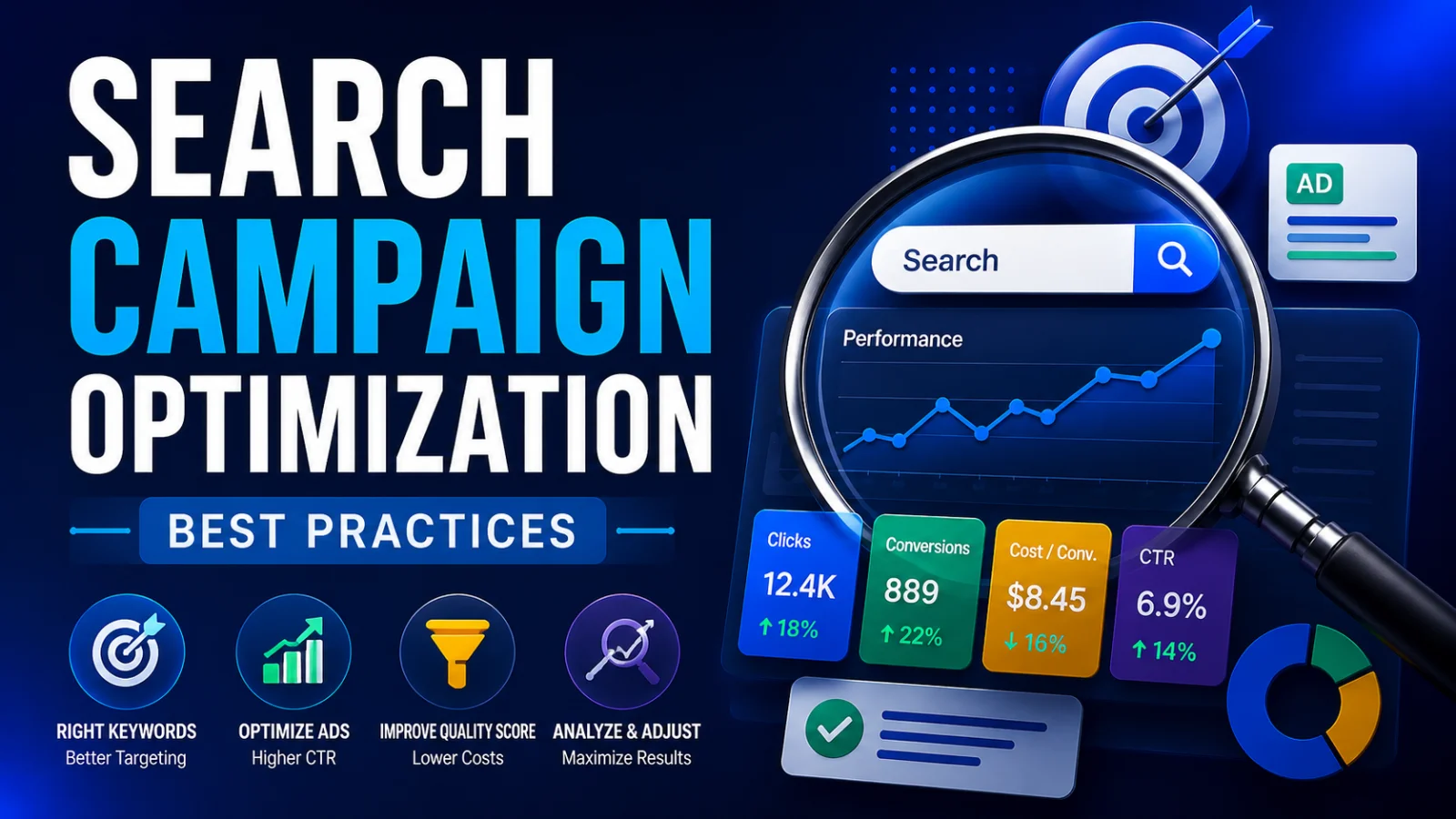
Search Campaign Optimization Best Practices
A well-built search campaign is only half the battle — ongoing optimization is what separates ads that merely run from ads that actually deliver consistent returns. Here are the best practices that keep your campaigns sharp, efficient, and continuously improving.
 search engine marketing
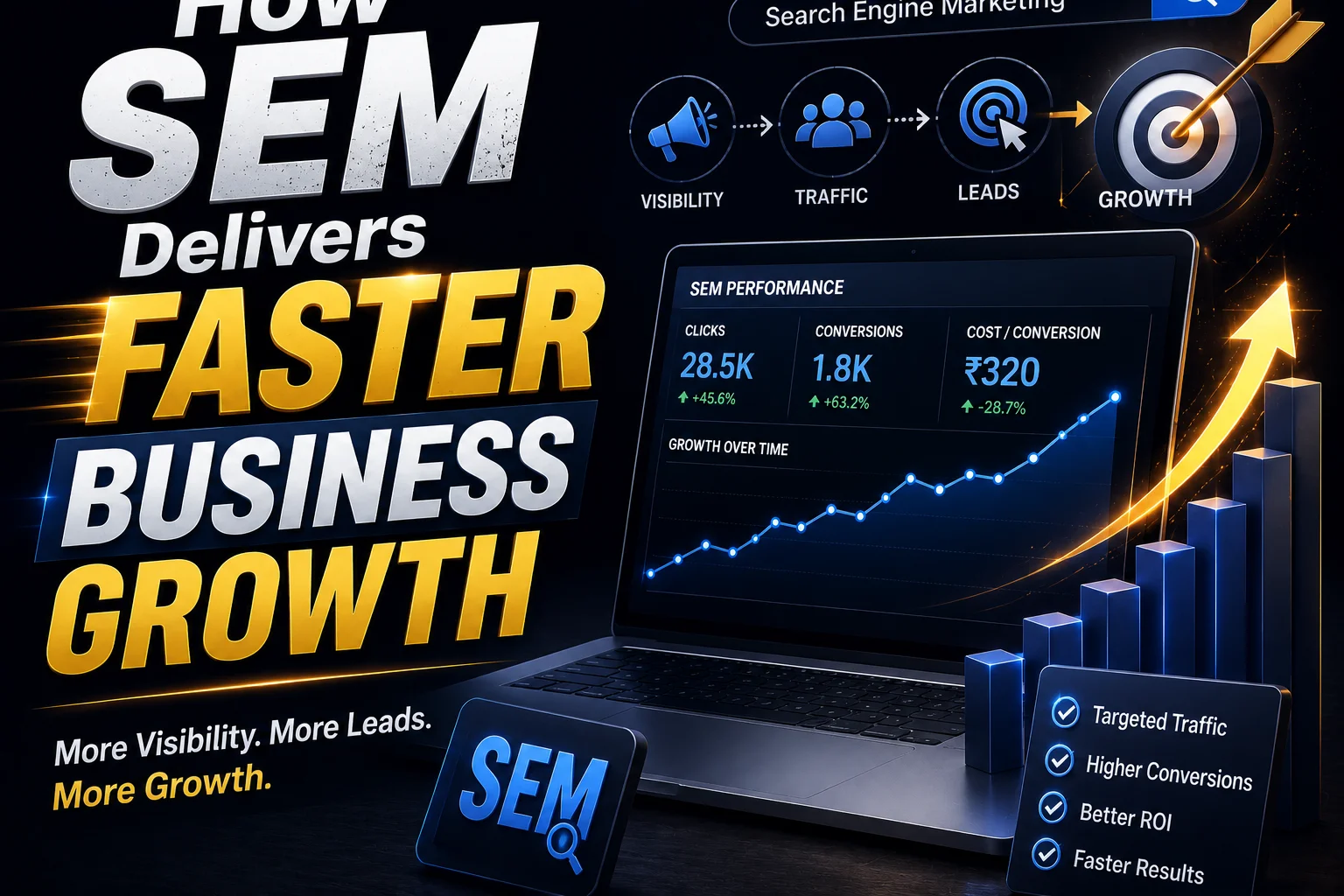
How SEM Delivers Faster Business Growth
Growth doesn't have to wait. This guide breaks down how SEM helps businesses skip the slow climb of organic rankings and start converting high-intent traffic almost immediately — with real-time data to back every decision.
 search engine marketing
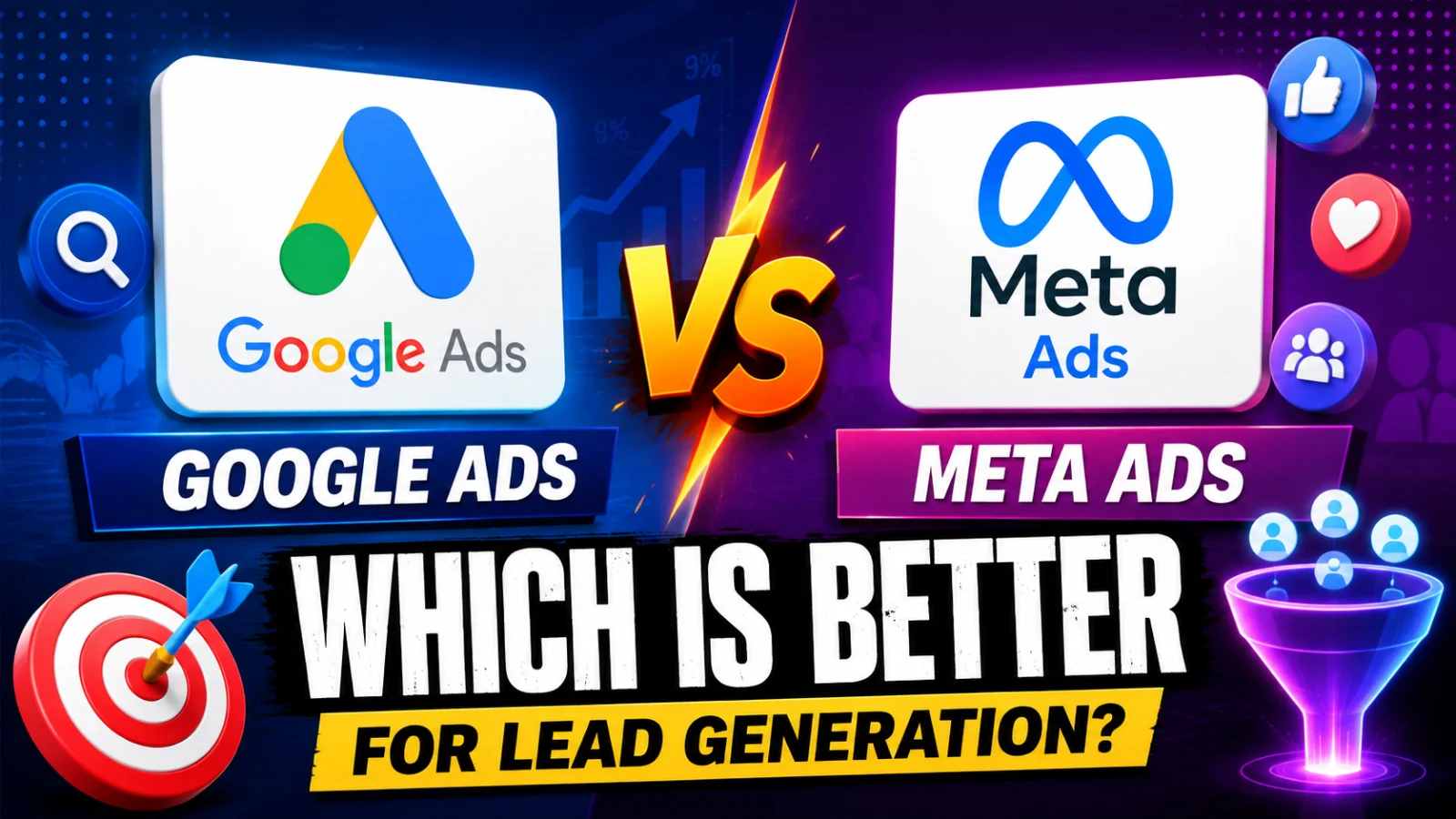
Google Ads vs Meta Ads: Which Is Better for Lead Generation in 2026?
Google Ads vs Meta Ads — which platform is better for lead generation? Compare their targeting, audience intent, cost, and conversion potential to choose the right advertising platform for your business.